Choosing the right NGO partner is one of the most consequential decisions a corporate CSR committee makes each year. Get it right, and your company's social investment reaches the communities it is meant to serve, backed by documentation that holds up under regulatory scrutiny. Get it wrong, and you risk misallocated funds, compliance violations, and reputational damage that can far outlast a single financial year. In a regulatory environment where the Ministry of Corporate Affairs is actively tightening enforcement across Form CSR-2 disclosures, this decision has never carried more weight.
At Let It Count, we identified critical gaps in the donor-recipient relationship that needed urgent attention. On one side, countless NGOs tirelessly work on critical social issues, yet many are forced to abandon their efforts due to insufficient funding. On the other side, donors often hesitate to provide financial support due to a lack of trust in the donation process, concerns about the efficient and honest use of their contributions, or simply a lack of awareness about how their support can make a meaningful impact. Additionally, many corporations, despite having good intent, lack a strategic approach to CSR that can enhance both their brand and create real impact simultaneously. We at Let It Count craft a Win-Win Scenario for everyone. With relentless focus on creating life-changing impact, we ensure your contribution brings meaningful value to your company and to the communities it touches.
This guide covers the specific documentation and field-level checks that Let It Count applies before introducing any NGO to a corporate partner. It is intended to help CSR heads, company secretaries, and compliance teams build a robust vetting process that protects both the company and the communities it intends to serve.
Why the Verification Step Cannot Be Skipped
Under Section 135 of the Companies Act, 2013, the corporate board retains legal accountability for every rupee disbursed under the statutory CSR mandate. If a partner NGO loses its registration mid-project or misutilises funds, the company cannot simply distance itself from that outcome. Directors and key managerial personnel may face personal liability. Funds may need to be redirected to a government-designated fund. The compliance record is permanently affected and publicly visible in annual regulatory disclosures.
Beyond the legal dimension, the reputational consequences of associating with a poorly governed organisation are significant and difficult to reverse. Institutional investors and ESG rating agencies scrutinise the quality of CSR governance, not merely the amount spent. A company found to have disbursed funds to an organisation that lacked basic legal eligibility will face questions from auditors, board members, and the public that a subsequent clean filing cannot easily erase. This is precisely why rigorous due diligence is not a box-ticking exercise. It is the foundation on which the entire CSR programme rests. The link between good CSR governance and corporate reputation is well established, and NGO selection is where that governance is most visibly tested.
Step 1: Verify Legal Registrations on Government Portals
The starting point for any NGO assessment is the verification of mandatory legal registrations. Let It Count verifies each of the following documents directly on the relevant government portal. We do not accept photocopies or soft copies from the NGO. Every check is conducted independently on the live registry.
Form CSR-1 Registration
Mandatory registration on the MCA portal that makes an organisation legally eligible to receive corporate CSR funds. Every disbursement requires a valid CSR Registration Number.
12AB Registration
Confirms the organisation's income tax exemption status as a charitable body, verified directly on the Income Tax India portal to ensure it is currently active.
80G Certificate
Confirms the charitable nature of the organisation as recognised by the Income Tax Department. Validates that the entity's stated purpose qualifies under tax law.
Trust Deed or Memorandum of Association
Reviewed to confirm that the stated objectives of the organisation align with the activities listed under Schedule VII of the Companies Act.
FCRA Registration (where applicable)
Verified on the FCRA Online portal for organisations that also receive foreign contributions alongside domestic CSR funding. Lapsed FCRA registrations represent an elevated compliance risk.
Want a Pre-Vetted NGO Shortlist for Your CSR Programme?
Let It Count independently verifies every NGO's registrations on government portals, reviews three years of financial records, and conducts physical on-site visits before making any corporate introduction. Zero commission from your CSR funds.
Talk to Our Advisory TeamStep 2: Review Three Years of Financial Records
Legal registration confirms that an organisation is eligible. It does not tell you whether it can responsibly manage a substantial corporate grant. For that assessment, you need the financial statements. Let It Count reviews audited financial statements and income tax returns for the preceding three consecutive fiscal years. This historical review answers several important questions.
An NGO that is reluctant to share financial records is itself a meaningful signal. A well-governed organisation with nothing to hide will provide this documentation willingly. Resistance to sharing financial statements is a red flag that warrants serious scrutiny before any decision is made.
Step 3: Conduct a Physical On-Site Visit
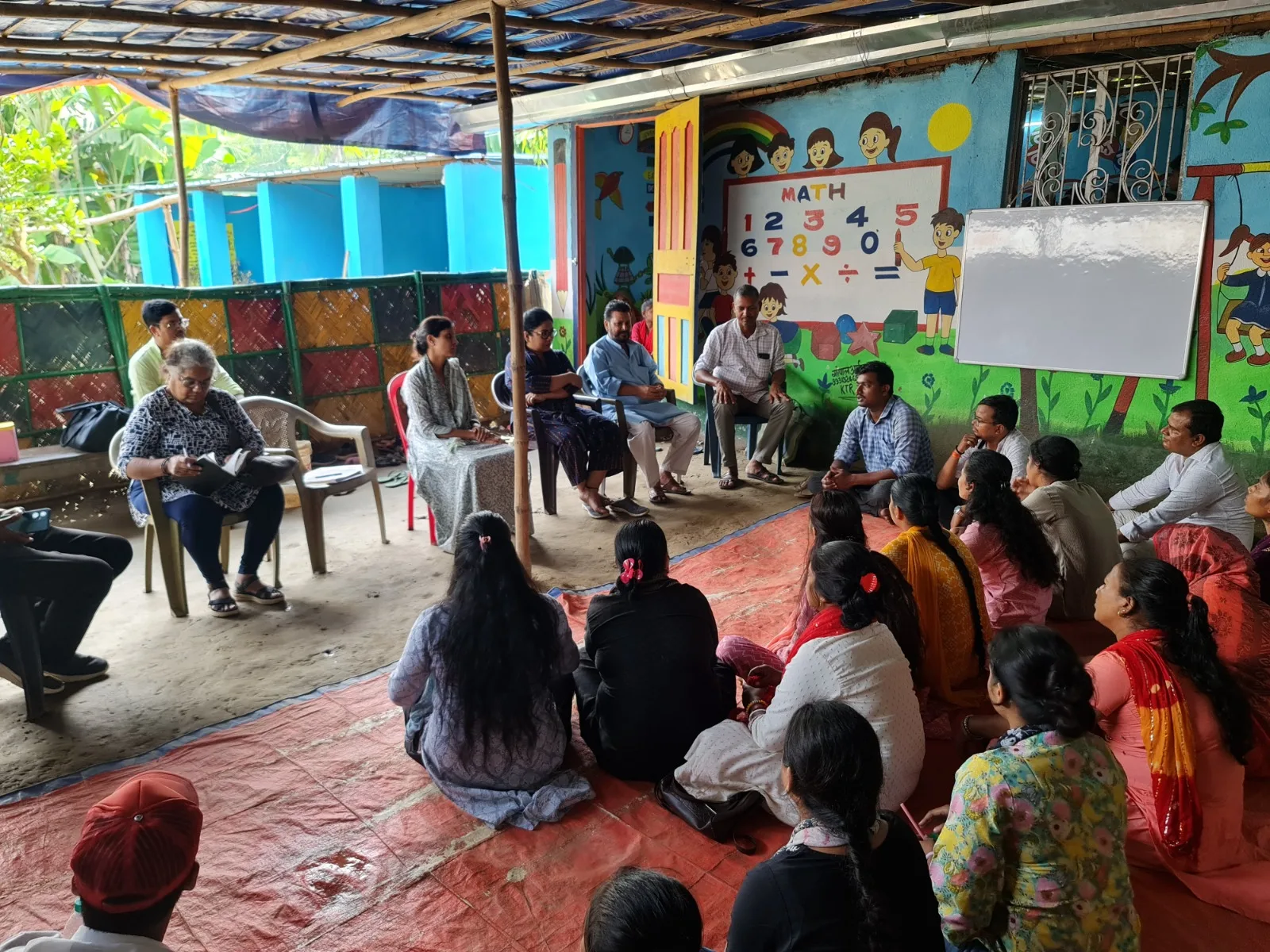
This step is what separates a rigorous due diligence process from a desk review. Let It Count conducts physical on-site visits to every NGO before making any corporate introduction. Our team speaks with programme staff, reviews field operations, and meets with community beneficiaries where possible.
Documents can be prepared, formatted, and presented in a way that creates a convincing impression on paper. An on-site visit reveals the operational reality that documents alone cannot communicate. Does the NGO have adequate field staff in the project geography, or are the staff numbers on paper inflated? Are ongoing programmes actually delivering what reports indicate? Does the leadership team demonstrate genuine domain expertise, or is the organisation primarily driven by personal relationships with donors?
The site visit also helps Let It Count assess absorption capacity. An NGO with a strong track record in a particular sector may lack the field infrastructure needed to absorb a corporate grant that is significantly larger than its existing annual budget. Identifying this mismatch before funds are committed allows for better programme design, more realistic milestone-setting, and ultimately a stronger outcome for both the company and the communities involved.
Step 4: Align the NGO's Focus with Your CSR Strategy
Compliance verification establishes the minimum bar. A genuinely effective CSR partnership also requires meaningful alignment between the NGO's programme expertise and the company's social investment priorities. An NGO that performs excellently in school education programmes is not automatically the right partner for a company whose CSR strategy focuses on rural livelihoods.
If your company is mapping CSR spending to the UN Sustainable Development Goals, the implementing organisation must track and report outcomes against those same frameworks. The SDG alignment must be genuine, not a post-hoc labelling exercise. If you are investing in a specific district or community, the NGO must have a documented, meaningful presence in that geography, not merely a registered office address in a different city.
Let It Count works with corporate CSR teams during the project identification stage to match funding priorities with verified NGO partners who are best positioned to deliver in a given sector and geography. For a detailed look at what this assessment involves, read our guide on why detailed NGO verification matters before any corporate commitment is made.
The Consequences of Inadequate Due Diligence
Funding an NGO without a valid CSR-1 number can invalidate the expenditure and trigger MCA adjudication proceedings against the company and its directors.
Poor CSR governance is flagged by ESG rating agencies in their social scoring. This affects the company's attractiveness to institutional investors with ESG mandates.
Association with a fraudulent or poorly governed NGO can appear in analyst reports, news coverage, and ESG assessments long after the relationship has ended.
The Ministry of Corporate Affairs has steadily increased enforcement activity on CSR-related violations. Form CSR-2 disclosures are now cross-referenced automatically against MCA portal data. Companies that funded NGOs without valid CSR-1 registrations have received formal notices requiring corrective action and financial restatements. This enforcement trend shows no sign of reversing.
How Let It Count Protects Your CSR Investment
Every NGO that Let It Count introduces to a corporate partner has been independently assessed across six dimensions. First, all legal registrations are verified directly on government portals, including CSR-1 status on the MCA portal. Second, the governance structure and leadership quality are reviewed. Third, three consecutive years of audited financial statements are examined. Fourth, the programme track record is assessed with verifiable outcome data. Fifth, field-level operational capacity is confirmed through physical on-site visits conducted by our team. Sixth, SDG alignment readiness is assessed to ensure the NGO can generate the impact data your Board's Report and BRSR disclosures will require.
Our advisory fees cover this entire process. Zero percent of the CSR funds your company commits reach Let It Count as commission. The full amount goes directly to the verified implementing organisation. Our commercial interest is in the quality of every match, not in the volume of funds placed.
The choice of NGO partner shapes the quality of every subsequent filing, assessment, and board discussion for years. Let It Count was built to ensure that foundation is sound before a single rupee is committed. To understand how this advisory model works for corporate and individual donors, visit our service overview page.
Conclusion
Effective CSR due diligence is not a one-time exercise. It is an ongoing commitment to ensuring that every rupee your company directs toward social impact reaches a verified, capable, and mission-aligned organisation. The regulatory environment under Section 135 demands documentation. ESG investors and BRSR reviewers demand transparency. The communities your company is trying to serve deserve accountability. Let It Count builds and maintains that accountability at every stage of your CSR programme. To get started with a pre-vetted NGO shortlist aligned with your priorities, contact us today.
Ready to Build a CSR Programme You Can Stand Behind?
Let It Count connects Indian corporates with independently verified NGO partners. We handle the due diligence, on-site visits, utilisation monitoring, and impact documentation throughout the financial year. Your board gets compliance-grade records. The communities get genuine impact. Contact us to receive a shortlist of verified NGOs aligned with your priorities.
Get in Touch TodayFrequently Asked Questions
What is the most critical document in the due diligence checklist?
How many years of financial history should a company review?
Are physical site visits really necessary, or is document review sufficient?
What is the risk of funding an NGO without a valid CSR-1 registration?
Can an NGO that is excellent at programme delivery still fail the due diligence assessment?
How does strategic alignment fit into the vetting process?
Can Let It Count manage the full NGO vetting and CSR programme process?
Sources
- Companies Act, 2013 (Section 135 and Schedule VII), Ministry of Corporate Affairs, Government of India
- Companies (Corporate Social Responsibility Policy) Rules, 2014 and subsequent amendments, Ministry of Corporate Affairs
- MCA Portal: Form CSR-1 registration and Form CSR-2 filing, Ministry of Corporate Affairs
- Income Tax Department: 12AB and 80G registration verification, Government of India
- FCRA Online Services, Ministry of Home Affairs, Government of India
- UN Sustainable Development Goals, United Nations
- Let It Count internal NGO due diligence methodology and field assessment experience